
METHOD / How we develop experiences
Designing
the first step.DOT BUTTON COMPANY / TOKYO
The world changes one first step at a time.
We develop the experiences that make those first steps happen.
- BASED ON
- Three projects in Setagaya City, Tokyo
- SINCE
- 2021
with Setagaya City - FIELDS
- Public–private partnership/Parks and public space/Social welfare × music
- FOR
- Local governments
Companies and developers
NUMBERS / Three projects
Daizawa Seseragi Park
Visitors on the first trial day (approx.), against an expected 100
SETAGAYA PORT
Registered members of a public–private platform running since 2021
SETAOLE LABEL
Total streams of the first 18 tracks (approx., seasons 1–3)
Sources: Setagaya City park newsletters (No. 4 and 5); Setagaya City FY2024 report on SETAGAYA PORT; SETAOLE LABEL release notes. Members as of October 2026; streams as of November 2025.
01 — WHY
Not a one-off.
An event can look like a success if the day goes well. What we want to develop is different: an experience after which someone takes their next step. People gather, stay, and begin to act on their own. That whole arc is what we design for.
A park pilot, a public–private platform we run with the city, a music label made with social welfare facilities. The fields are different, but what worked had a lot in common. This page sets out those common threads as five principles and a four-step cycle.
Planners will recognise ideas from tactical urbanism, “lighter, quicker, cheaper” placemaking and co-design. What we add is a way of running them inside Japanese local government, where decisions move through committees and every result needs to be on the public record.
PRINCIPLE 01
Test on site
before deciding.
Some questions cannot be answered around a drawing or in a meeting room. So before anything is decided, we test it in the real place, small, starting with a single day. Testing turns the discussion from “what might happen” into “what happened”.
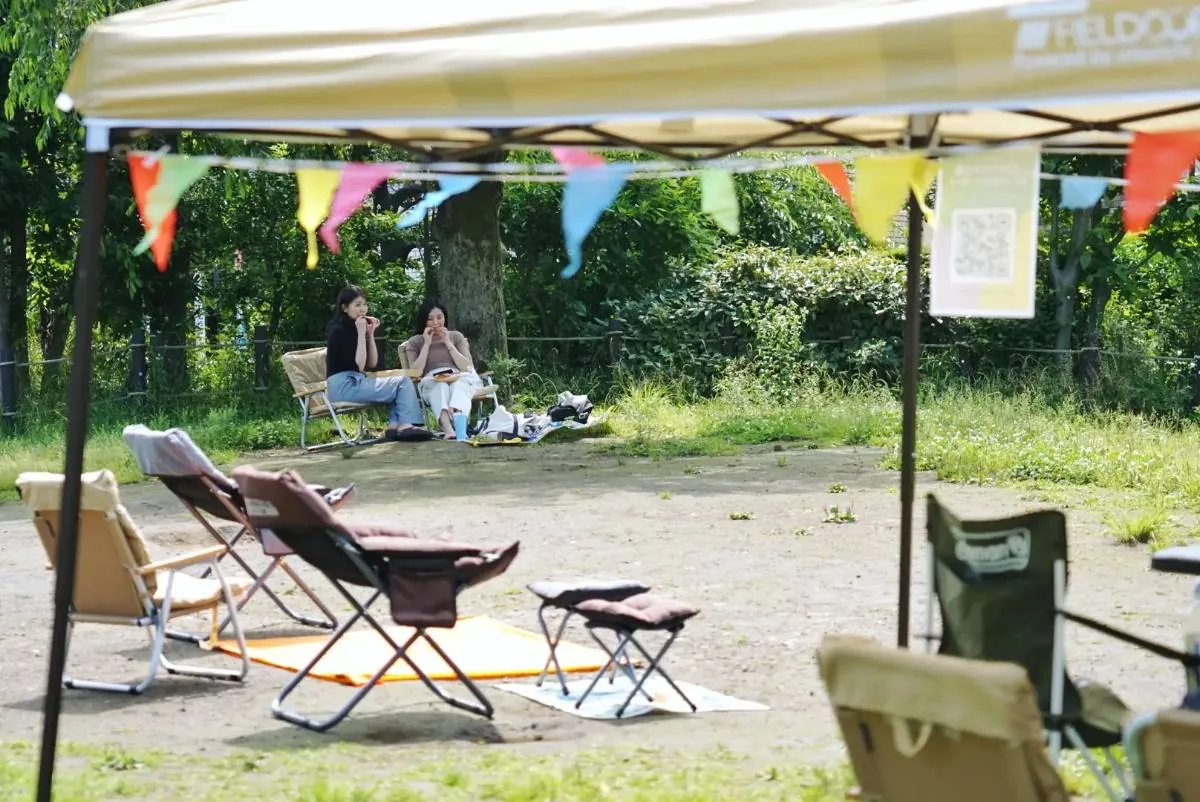
Daizawa Seseragi Park
Can children play ball here? How high can a fence be before it spoils the view? We put up temporary fences at 2 m, 3 m and 5.5 m and measured ball-game noise at three points.
SETAOLE LABEL
Each season begins with a visit to one welfare facility, listening with staff and users for the sounds worth recording. We listen to the place before we write the plan.
SETAGAYA PORT
The way in is a casual meetup held at venues around the city. In FY2024 it ran ten times with 277 participants, and consultations and projects grow from there.
PRINCIPLE 02
Shift the focus
every round.
We never run the same thing twice. What we learned last time, including what went wrong, goes back into the next design. A pilot fails if it leans only towards testing or only towards buzz, so we move the centre of gravity each round and go back and forth between the two.
Daizawa Seseragi Park
Round one observed how people used the space. Round two traded buzz for testing. Round three handed more of the programme to residents. The aim changed every time.
SETAOLE LABEL
Season 1: three artists, three tracks. Season 3: 64 recorded sounds, seven artists, eight tracks. Subject and scale change with each facility; seasons 1–4 have produced 24 tracks.
SETAGAYA PORT
The city publishes a report on the platform every fiscal year. That review feeds the next year’s programme, and the platform has kept going for five and a half years.
PRINCIPLE 03
Build the vessel
that keeps people.
When an event ends, people scatter. So we first build a vessel where people can stay and move on to the next step, and run events and projects inside it. A vessel gives someone who came once a reason to come back.
SETAGAYA PORT (membership)
We started with a membership platform. It is free and open to anyone, inside or outside the city, companies, individuals and students. It now has more than 7,800 members.
SETAGAYA PORT (three tiers)
There is a place for people who come once a year, once a month, or who want to lead a project: an entry tier (meetups and consultations), a co-creation tier (projects) and a large annual event.
SETAOLE LABEL
Born as a project inside SETAGAYA PORT, it continues as a “label”. It has run every year since 2022 and is now in its fifth season.
PRINCIPLE 04
Hand over
the lead role.
If we stay at the front, the experience stops when we leave. We design so that the people involved become the protagonists, and hand over a little more each time. That also means moving past the line between those who support and those who are supported.
SETAOLE LABEL
Welfare facilities are co-creators, not recipients of support. What to record is decided together with the people who work and spend their days there.
Daizawa Seseragi Park
For round three we widened the themes to five and added more resident-led activities, such as a swap market and story readings.
SETAGAYA PORT
The city stands at the front as organiser; we stay in the role of secretariat. Several member-led projects on local issues are now under way.
PRINCIPLE 05
Leave a system that lasts
and numbers anyone can check.
Enthusiasm alone does not keep an experience going. We leave behind a way for money to flow and numbers that anyone can verify. With numbers on record, the purpose survives a change of staff and becomes the basis for the next decision.
SETAOLE LABEL
Streaming revenue is shared between the facilities and the artists. Being able to continue is part of the project itself.
SETAGAYA PORT
The city publishes results every fiscal year, so the reason the platform exists is passed on even when the officers in charge change.
Daizawa Seseragi Park
The vote on layout options was close, 41% for Plan B and 38% for Plan A. Those figures went straight into the design committee’s discussion.
02 — THE CYCLE
Four steps,
repeated.
On the ground, the five principles run as these four steps. We do not stop after one loop: every turn adds precision and brings more people in.
- STEP 01
Frame the question
Pick the decision a meeting cannot settle. Put into words, with everyone involved, what needs to be checked to move forward.
- STEP 02
Test small
Try it in the real place, starting with one day. Design the test to fit the question: temporary structures, votes, recordings.
- STEP 03
Record and feed back
Record visitors, votes, voices and photos, and take them back to the committee and the next round. Keep the numbers in a form that can be published.
- STEP 04
Hand over and sustain
Next time, give more of the lead to the people involved, and build the system and money flow that let it continue.
An experience is never finished in one go.
Test, feed back, hand over, and the next step appears.
03 — CASES
Where this method
came from.
These three projects are the source of the principles and the cycle. The case pages (in Japanese) cover team structure and figures in detail.
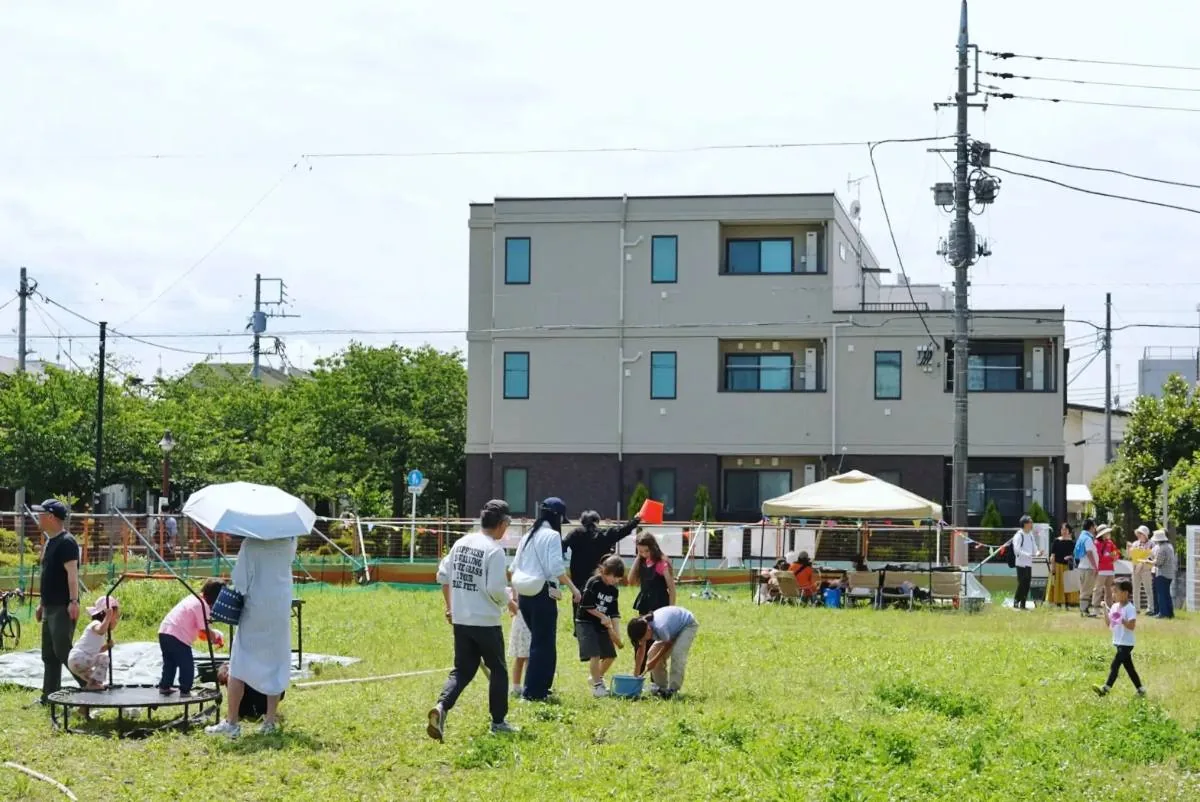 PARKS AND PUBLIC SPACE
Daizawa Seseragi Park
Before the design was fixed, we held three trial days where residents could try what they wanted to do in the park.
View case (Japanese) ↗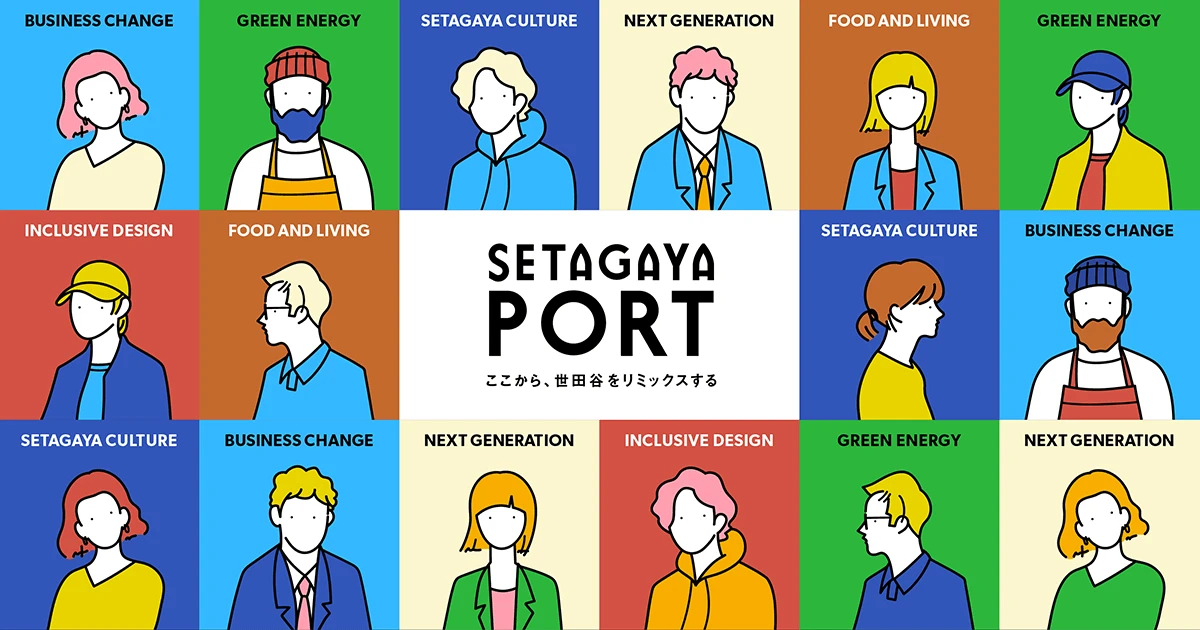 PUBLIC–PRIVATE PARTNERSHIP
SETAGAYA PORT
Five and a half years with Setagaya City, running a platform with more than 7,800 members.
View case (Japanese) ↗ SOCIAL WELFARE × MUSIC
SETAOLE LABEL
Artists make music from the sounds and laughter of welfare facilities, and share the revenue with them.
View case (Japanese) ↗CONTACT
Shall we design
that first step together?
We welcome conversations from the earliest stage, before a plan has taken shape. From designing how to test on site to running it, recording results and building a system that lasts. Enquiries in English are welcome.